
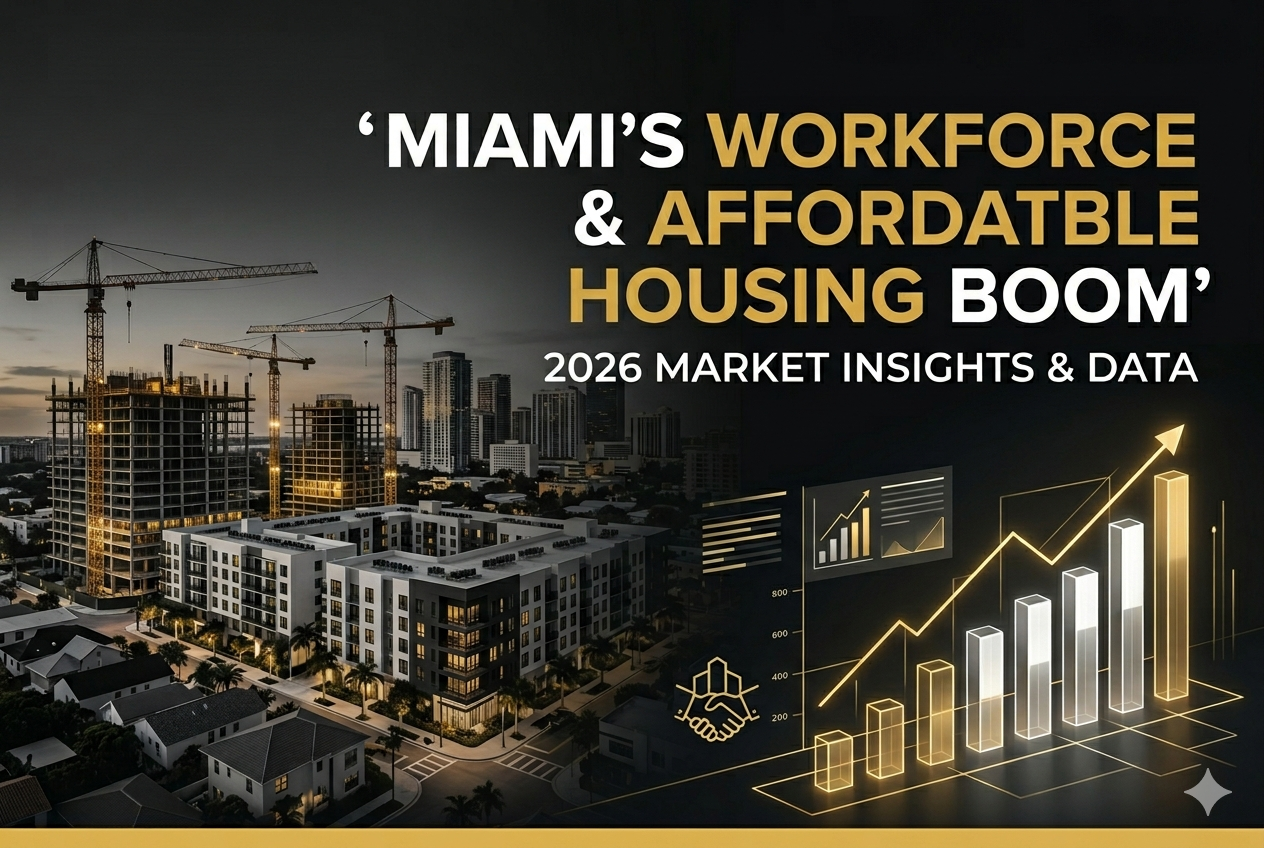
The real estate narrative in Miami has undergone a significant transformation. While the city was once defined almost exclusively by its luxury high-rise skyline, 2026 has solidified a new dominant sector. The workforce and affordable housing market is currently experiencing its most substantial development surge in decades.
This shift is not merely a trend, but a structural response to the economic realities of a city that has become a global hub for finance and technology. As the "missing middle" of the population seeks high-quality residential options, developers and investors have pivoted toward a sector that offers both social impact and robust, defensive returns.
A Market Driven by Urgent Demand
The momentum behind Miami’s workforce housing boom is rooted in unprecedented migration patterns observed between 2024 and 2025. According to recent market data, South Florida continues to see an influx of residents from high-tax states, though the demographic has shifted from ultra-high-net-worth individuals to the essential professional class.
This growth has created significant housing affordability pressure. Industry data shows that nearly 50 percent of Miami households are now considered rent-burdened, meaning they spend more than 30 percent of their gross income on housing. This displacement pressure has forced the workforce, including educators, healthcare professionals, and first responders, to look further from the urban core. In response, 2026 has seen a localized effort to bring housing back to the neighborhoods where these professionals work.
Key Data Behind the Surge in Development
The 2026 development pipeline reflects a disciplined but aggressive expansion of workforce units. Based on trusted housing reports, the following metrics define the current landscape:
Development Pipeline: Approximately 18,500 workforce and affordable units are currently under construction across Miami-Dade County, a 22 percent increase from 2024 levels.
Occupancy Levels: Workforce housing assets maintain a stabilized occupancy rate of 96.4 percent, significantly outperforming the luxury tier which has seen slight softening due to increased supply.
Rent Comparisons: While luxury Class A rents in the urban core average $3,800 per month, workforce housing units are being delivered at price points between $1,900 and $2,400, meeting the demand of those earning 60 to 120 percent of the Area Median Income (AMI).
Supply vs. Demand: Despite the increase in deliveries, the market still faces a deficit of over 40,000 units to fully satisfy the current workforce demand.
The Role of Public-Private Partnerships
One of the most effective catalysts for the 2026 boom has been the deepening collaboration between private developers and local government entities. Public-private partnerships have moved beyond simple grants into sophisticated mixed-income and transit-oriented developments.
Transit-oriented projects are particularly prevalent this year. By leveraging land adjacent to the Metrorail and Brightline corridors, developers are creating high-density hubs that reduce the cost of living by eliminating the need for long, car-dependent commutes. These projects often combine market-rate units with designated workforce housing, ensuring a diverse social fabric within new developments.
Policy and Incentives Accelerating Development
The regulatory environment in 2026 has become increasingly favorable for those addressing the housing gap. Legislative actions, including the evolution of the Live Local Act, have provided the necessary tools for developers to bypass traditional zoning hurdles.
Key incentives currently driving the market include:
Zoning Flexibility: Administrative approvals for increased height and density in areas previously restricted to commercial use.
Density Bonuses: Policies that allow for up to a 40 percent increase in unit count when a specific percentage of the project is dedicated to affordable housing.
Tax Exemptions: Significant ad valorem tax exemptions for developments that lock in long-term affordability for residents earning below certain income thresholds.
These policies have made workforce housing not just a civic necessity but a financially viable alternative to traditional luxury development.
Investment Opportunities in Workforce Housing
For institutional stakeholders, workforce housing in Miami has emerged as a premier defensive asset class. Unlike the volatility often found in the high-end condo market, workforce housing offers exceptional occupancy stability.
Investors are drawn to the long-term demand fundamentals. Because the supply remains so far behind the actual need, these assets experience minimal turnover and consistent rent growth. In a period of broader economic recalibration, the predictable cash flow associated with workforce multifamily assets provides a reliable hedge against market fluctuations.
Submarket and Development Trends
The geography of Miami development is expanding. While the urban core remains active, emerging neighborhoods like Allapattah, Little River, and West Miami are seeing the highest concentration of workforce projects.
In 2026, we are observing a "hub and spoke" growth pattern. Neighborhoods that were previously overlooked are now receiving capital for mixed-use projects that combine attainable housing with ground-floor retail. Hialeah, in particular, has seen a massive influx of institutional capital, transforming its industrial corridors into residential communities designed specifically for the local workforce.
Outlook for 2026 and Beyond
As we move through the latter half of 2026, the outlook for Miami’s housing market remains optimistic but grounded in data. The construction pipeline is expected to stay active through 2028 as developers continue to take advantage of current tax incentives.
While market stabilization is beginning to occur in certain luxury submarkets, the structural demand for workforce housing shows no signs of waning. The focus for the coming years will likely be on maintaining the quality of these deliveries and ensuring that the infrastructure, particularly transit and education, keeps pace with the new residential density.
Connect with Molka Epelboim
The complexity of the South Florida real estate market requires an analytical approach and deep local expertise. We provide institutional-grade market insights and development advisory to help stakeholders navigate the evolving landscape of workforce and affordable housing.
To discuss investment opportunities or strategic development within the Miami market, we invite you to connect with our team for a professional consultation.